
4 Ways to Care for Your Physical Health
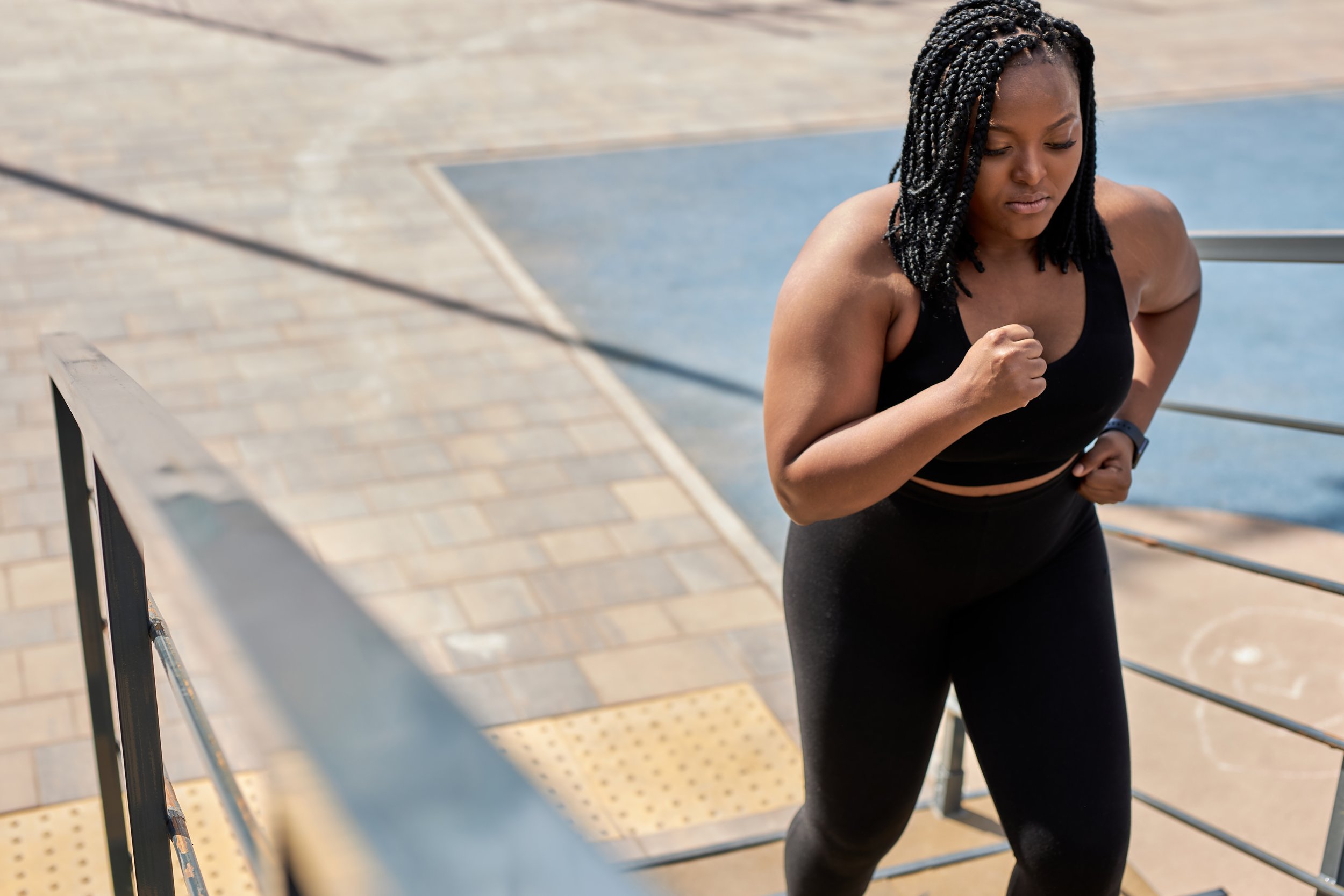
Your body carries you through a lot.
Workdays. Errands. Celebrations. Stressful seasons. Long nights. Vacations. Caregiving. Ordinary Tuesdays. Everything you want to experience in this life happens, in some way, through the body you're living in.
So caring for your physical health doesn't have to begin with what you want to change about your body.
It can begin with a much simpler question:
What helps my body feel supported?
At Love YU, physical well-being isn't about achieving a perfect weight, diet, fitness routine, or version of health. It's about paying attention to your body and having information, resources, and options that can help you care for it in ways that make sense for your life.
Here are four places you might begin.
1. Find Ways to Move That Work for YU
Movement can support your heart, muscles, bones, sleep, mood, mobility, and overall health.
Current physical activity guidelines recommend that most adults work toward 150 to 300 minutes of moderate-intensity aerobic activity each week, along with muscle-strengthening activities on at least two days.
But here's an equally important part of the guidance:
Some movement is better than none.
You don't have to start with 150 minutes.
And movement doesn't have to happen in a gym.
It might be walking.
Dancing.
Swimming.
Cycling.
Yoga.
A workout at home.
Taking a class.
Gardening.
Or something completely different.
Instead of asking, “What's the best workout?” you might start with:
“What kind of movement can I realistically see myself doing?”
Bonus points if you actually enjoy it.
2. Give Your Muscles Some Love Too
Cardio tends to get a lot of attention when we talk about fitness, but strength matters too.
We naturally lose some muscle mass as we age, and resistance training can help maintain or increase muscle strength and support bone health, physical function, balance, and our ability to keep doing everyday things.
And strength training doesn't necessarily mean lifting heavy weights at a gym.
Resistance bands count.
Body-weight exercises count.
Hand weights count.
Machines count.
Lifting heavier things counts when it's done safely and intentionally.
What strength looks like for you may also change with age, ability, injury, health conditions, or simply what you enjoy.
The goal isn't to prove how strong you are.
It's having a body that can support the life you want to live.
3. Nourish Your Body Without Making Food the Enemy
Food does a lot more than change the number on a scale.
It gives us energy.
Provides nutrients our bodies need.
Supports muscles and bones.
And yes, it can also bring pleasure, culture, tradition, connection, and joy.
A nourishing eating pattern doesn't require labeling foods as “good,” “bad,” “clean,” or “cheat” foods.
Instead, you might think about what you'd like to have more of.
More vegetables or fruit.
More fiber-rich foods.
More whole grains.
More foods that provide protein.
More water.
More meals that leave you feeling satisfied and energized.
Nutrition labels can also be useful information when you want them. They can help you understand things like added sugars, sodium, saturated fat, fiber, and other nutrients without requiring you to track every bite you eat.
Healthy eating doesn't have to mean eating perfectly.
And it definitely doesn't mean giving up the foods you love.
Sometimes nourishment is the salad.
Sometimes it's your grandmother's macaroni and cheese.
Sometimes it's both on the same plate.
4. Pay Attention to What Your Body Is Telling You
Physical health is bigger than food and fitness.
Sleep matters.
Energy matters.
Pain matters.
Mobility matters.
Your medical care matters.
And sometimes your body tells you something has changed before you fully understand what it means.
Maybe you're more tired than usual.
Something hurts that didn't before.
Your sleep has changed.
Your digestion feels different.
An activity that once felt easy feels harder.
Or you simply don't feel like yourself.
You don't have to diagnose every change on your own.
Paying attention might mean resting.
Changing something in your routine.
Making a note of a pattern.
Or talking with a healthcare professional when something is persistent, new, severe, or concerning.
Caring for your body can include knowing when you'd like more information or support.
What About Weight?
Weight can be part of the physical-health conversation.
It just doesn't have to be the conversation.
If changing your weight is important to you, that's allowed.
Maybe it's connected to a health recommendation.
Maybe you'd like to change your body composition.
Maybe you have a personal goal.
Your reasons belong to you.
But movement and nourishing food still offer benefits even when the number on the scale doesn't change. Your strength, endurance, blood pressure, mobility, sleep, energy, lab values, and how you function in everyday life can all tell you something about your physical health too.
You are more than one measurement.
Care for the Body That Carries YU
There are plenty of messages telling women what their bodies should look like.
Love YU is more interested in helping you build a relationship with the body you already have.
That might include moving more.
Getting stronger.
Eating in ways that support your health and bring you pleasure.
Getting more rest.
Keeping up with medical care.
Pursuing a health goal.
Or paying closer attention when something doesn't feel right.
You don't have to overhaul everything at once.
You don't have to follow someone else's wellness routine.
And you don't have to wait until your body looks different to start caring for it.
Your Love YU Compass can simply bring you back to the question:
What might support my body right now?
Then you get to decide what makes sense for YU.
Resources Worth Knowing
For evidence-based guidance on movement and physical activity, visit the CDC's Physical Activity Basics.
For information about nutrition and healthy eating, visit the CDC's Nutrition resources.