
Finding Freedom in Fitness: Movement That Fits Your Life

What comes to mind when you hear the word fitness?
A gym?
A certain body type?
An intense workout?
A number on a scale?
Something you know you're "supposed" to be doing?
For many of us, fitness has been presented as something to achieve, maintain, measure, or master. We're told to push harder, stay disciplined, stop making excuses, and keep going until we get the results we're after.
But what if movement didn't have to begin with everything you want to change about your body?
What if it could begin with the body you have right now?
At Love YU, we believe loving yourself unapologetically includes developing a relationship with your body that isn't dependent on what it looks like, how much it weighs, or what it can accomplish.
Movement can be part of that relationship.
Not because you need to earn your body.
Not because you need to fix it.
Simply because moving in ways that work for you can support how you feel, function, rest, and experience your life.
Fitness Doesn't Have to Look a Certain Way
There is no single image of a "fit" woman.
She doesn't have one size, shape, age, ability, income, or level of experience.
And fitness doesn't belong exclusively to people who go to gyms, take boutique classes, own expensive equipment, or have an hour every morning to work out.
Physical activity can include walking.
Dancing.
Gardening.
Swimming.
Strength training.
Yoga.
Cycling.
Playing with your children.
Taking the stairs.
Rolling in a wheelchair.
Stretching between meetings.
Playing a sport.
Taking a class.
Moving around your living room because your favorite song came on.
It can be structured or spontaneous.
It can be challenging or gentle.
It can happen for an hour or for ten minutes.
The CDC notes that adults can experience health benefits from physical activity even when they aren't meeting the full recommended amount.
So movement doesn't have to be all or nothing.
It gets to fit your life.
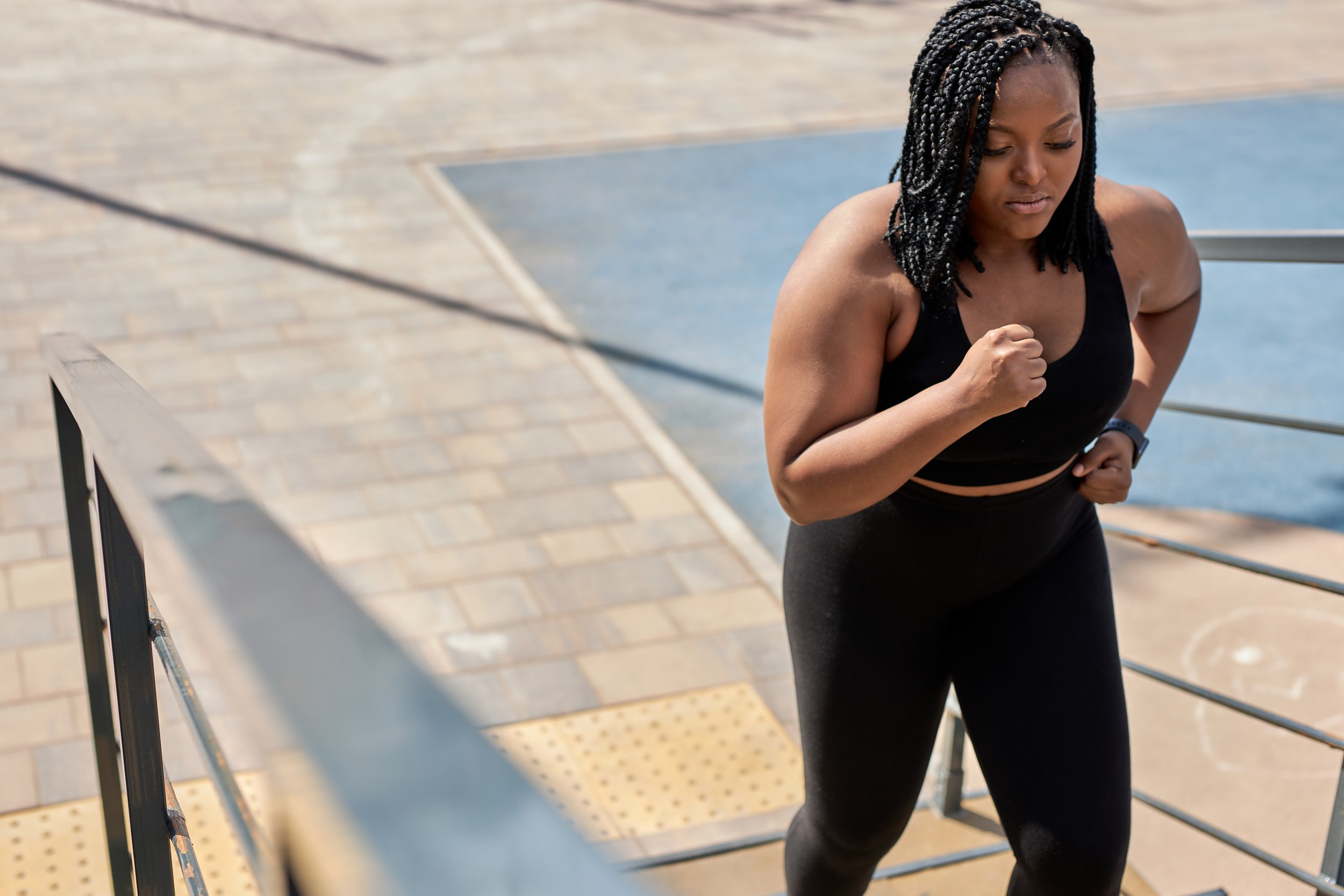
Your Body Isn't a Before Picture
Fitness culture has a way of convincing us that our current bodies are temporary problems waiting to be solved.
We'll wear the outfit when we lose the weight.
We'll take the class when we're more in shape.
We'll go to the gym once we feel less self-conscious.
We'll feel good about ourselves when we reach the goal.
That can put life on hold.
Your body isn't a waiting room for some future version of you.
You deserve to experience movement, pleasure, confidence, clothing you love, photographs, vacations, intimacy, adventure, and your own life in the body you're living in today.
You may have things you'd like to change.
You may have fitness goals.
You may want to become stronger, increase your endurance, change your body composition, improve a health marker, or lose weight.
Those desires don't disqualify you from loving yourself now.
Self-love doesn't require pretending you never want anything to change.
It simply means change doesn't have to begin with rejection.
Movement Can Be About More Than Weight
Weight loss dominates so many conversations about fitness that it's easy to forget how much more movement can offer.
Regular physical activity is associated with benefits that include improved sleep, reduced feelings of anxiety, stronger bones and muscles, better physical function, and lower risks for several chronic conditions.
But there are also reasons to move that don't appear on a medical chart.
Maybe you like feeling strong.
Maybe walking clears your head.
Maybe dancing makes you happy.
Maybe you want enough stamina to explore a new city on vacation.
Maybe strength training makes carrying groceries easier.
Maybe you love the community you've found in a fitness class.
Maybe stretching feels good after sitting at a desk all day.
Maybe you simply enjoy moving your body.
Those reasons count too.
Start With What You Have Access To
One of the problems with mainstream fitness culture is how easily wellness becomes something we're expected to buy.
The membership.
The clothes.
The shoes.
The equipment.
The trainer.
The subscription.
The supplements.
The tracker.
Those things may be enjoyable or useful if you want them and have access to them.
But they aren't admission tickets to movement.
If cost is a consideration, movement might happen with what you already have access to.
Walking outside.
Dancing at home.
Following a free online workout.
Using household objects for resistance.
Taking advantage of a local park or recreation center.
Using stairs.
Doing body-weight exercises.
Stretching on the floor.
You may also decide that paying for a gym, trainer, class, piece of equipment, or activity you genuinely enjoy is a worthwhile investment in yourself.
Neither approach is more committed than the other.
The question is simply: What works for you and your resources right now?
Your Schedule Isn't an Excuse
Sometimes you really are busy. Not "making excuses."
Just really busy.
Work, caregiving, parenting, commuting, relationships, appointments, household responsibilities, community commitments, and the basic work of being a Black woman all require time.
Fitness advice can sometimes ignore that reality.
If an hour-long workout five days a week doesn't fit your life, that doesn't mean you've failed at fitness.
Current physical activity guidance allows activity to be spread throughout the week and accumulated in smaller amounts.
That could mean a walk at lunch.
Ten minutes before work.
Dancing while dinner cooks.
A longer workout on the weekend.
A few strength exercises at home.
Or some weeks, much less movement than others.
Your life has seasons.
Your relationship with movement can have them too.
Your Ability Doesn't Determine Your Worth
Not every body moves in the same way.
Disability, chronic conditions, pain, injury, pregnancy, aging, surgery, mobility differences, and other health considerations can all influence what movement looks like.
That doesn't make someone's body less worthy of care.
And it doesn't make movement meaningless if it has to be modified.
Adaptive movement can include wheelchair rolling, swimming or water exercise, resistance bands, modified yoga, seated exercises, adaptive sports, and many other possibilities. The CDC notes that adults with chronic conditions and disabilities can receive meaningful health benefits from physical activity and recommends being as active as one's abilities and circumstances allow.
If a health condition, disability, injury, pregnancy, or other medical consideration affects what feels safe or appropriate for you, a healthcare professional or qualified movement specialist can help you understand your options.
The goal isn't to force your body to perform like someone else's.
It's to explore what supports yours.
You Don't Have to Love Every Workout
There's a popular idea that the secret to fitness is finding something you love.
That can certainly help.
But sometimes movement is simply something you don't mind doing.
That's okay too.
You don't have to fall in love with running.
You don't have to become a gym girl.
You don't need matching sets, a fitness identity, a transformation story, or a new personality built around working out.
Maybe you enjoy walking but hate lifting weights.
Maybe you love lifting weights but have no interest in running.
Maybe you like dancing but dislike structured exercise.
Maybe you enjoy exercising once you're doing it but never feel excited beforehand.
Your relationship with movement doesn't have to look inspirational to be worthwhile.
Goals Can Support You Without Defining You
There's nothing wrong with having a fitness goal.
Maybe you'd like to walk farther without getting tired.
Lift something heavier.
Become more flexible.
Train for a race.
Improve your balance.
Build strength.
Return to an activity you once enjoyed.
Or simply move more often.
Goals can give us something meaningful to work toward.
But your goal doesn't have to become a verdict on your discipline, worth, or commitment to yourself.
Some weeks you'll have more capacity.
Others you'll have less.
You may change your goal.
You may stop pursuing it.
You may discover that what you thought you wanted isn't actually what you want anymore.
That's allowed.
Movement exists to support your life.
Your life doesn't exist to support your fitness plan.
Consider How Movement Makes You Feel
Fitness culture gives us plenty of numbers to monitor.
Weight.
Steps.
Calories.
Miles.
Minutes.
Repetitions.
Heart rate.
Personal records.
Those measurements can be useful if they help you.
But they're not the only ways to notice progress.
You might also ask:
Do I feel stronger?
Am I sleeping differently?
Does this help my mood?
Can I do something more comfortably than I could before?
Do I have more stamina?
Do I enjoy this?
How do I feel afterward?
Does this fit into my life without consuming it?
Those answers can tell you something too.
Movement Can Also Be Joy
Black women's wellness conversations often center disease prevention, disparities, stress, and everything we're supposedly at risk for.
Those conversations matter.
But they don't have to be the only reason we move.
Movement can also be pleasure.
Put on the song.
Take the dance class.
Walk somewhere beautiful.
Roll through the park.
Swim because you love being in the water.
Learn tennis at 45.
Try skating again.
Lift because feeling powerful in your body makes you smile.
Take the beginner class even if everyone else seems to know what they're doing.
Move because it connects you with friends.
Move because it gives you time alone.
Move because it feels good.
Or choose rest today because that feels better.
Joy belongs in conversations about our bodies too.
Finding Your Own Relationship With Fitness
At Love YU, we're not interested in telling Black women to stop making excuses.
We are interested in creating room for more honest questions.
What kind of movement feels accessible to me right now?
What do I actually enjoy?
What would I like my body to be able to do?
What gets in the way of movement for me, and is that something I want or am able to change?
Am I pursuing this goal because I want it, or because I've been taught that my body needs fixing?
What would movement look like if it came from care instead of criticism?
There may not be one answer.
And your answer may change.
That's part of having a relationship with yourself.
Loving YU Includes the Body You're In
Your body has been with you through every version of yourself.
It doesn't need to cross a finish line before it deserves your affection.
Movement can be one way of caring for it.
So can rest.
So can nourishment.
So can medical care.
So can pleasure.
So can leaving it alone for a minute and simply living your life.
Fitness doesn't have to be something you conquer.
Your body isn't your opponent.
There is no finish line where you finally become worthy of feeling good about yourself.
Maybe physical freedom begins somewhere much simpler:
Knowing that you can move because you want to.
Rest when you need to.
Pursue goals that matter to you.
Change those goals when they no longer fit.
And build a relationship with movement that belongs to YU.
A Resource Worth Knowing
For current information about the health benefits of physical activity, recommendations for adults, and different ways movement can fit into everyday life, visit the CDC's Physical Activity Basics.
The current federal recommendation for most adults is at least 150 minutes of moderate-intensity aerobic activity each week, or an equivalent amount of vigorous activity, along with muscle-strengthening activity on at least two days. But those recommendations aren't a pass-or-fail test: some activity is better than none, and any amount of moderate- or vigorous-intensity activity can provide health benefits.